
Reviews
Government decision documents compared: what each one actually decides
Government decision documents compared by status and effect, including bills, laws, rules, orders, resolutions, guidance, budgets, contracts, and notices.
Which record supports the claim?
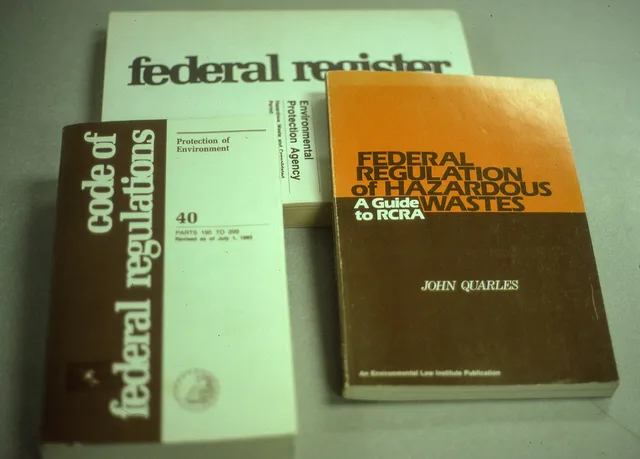
To test a government claim, first identify the record that supports it and the stage it represents. Note the issuer, document label, version, date, and governing system before interpreting its language; a familiar title alone cannot establish legal effect or show that an announced step has occurred.
Set the wording of a report against the primary record, not an informal description of it. If a status remains uncertain, identify what the document establishes and what it leaves unresolved, then compare the claim with government reporting problems before calling it settled.
Can a notice establish more than it says?
No. A public notice establishes the action, risk, meeting, deadline, or time period stated by its issuer. It does not, by itself, prove a permanent policy, a completed outcome, or effects beyond its stated scope; read it with the notice date and issuing authority.
Read the issuing authority, affected location, opening and closing conditions, access route, and superseding notices as one package. For safety notices, the public safety alert checklist keeps key checks together. During live coverage, label a scheduled notice separately from an action already completed, as breaking update types explains.
What can a comparison image tell me?
It can help separate document functions and reporting risks, but it cannot establish the status of a specific record. Inspect the record itself and verify its current version, operative dates, and any later action against the issuing authority's official publication.
Document types and reporting risks
Document
- Bill
- Proposes legislation
- Public law
- Records enacted legislation
- Proposed rule
- Planned regulatory text
- Final rule
- Publishes agency action
- Executive order
- Directs executive action
- Resolution
- Expresses position
- Guidance
- Explains interpretation
- Budget
- Plans or provides money
Function
- Bill
- Introduced, amended, passed?
- Public law
- Effective now or later?
- Proposed rule
- Comment period open?
- Final rule
- Effective, compliance, stay?
- Executive order
- Scope, date, revocation?
- Resolution
- Binding or ceremonial?
- Guidance
- Binding force claimed?
- Budget
- Proposed, enacted, spent?
Status question
- Bill
- Calling proposal law
- Public law
- Ignoring conditions
- Proposed rule
- Reporting proposal as requirement
- Final rule
- Assuming immediate effect
- Executive order
- Treating announcement as operative
- Resolution
- Assuming it changes law
- Guidance
- Calling advice a regulation
- Budget
- Mixing allocations with outlays
Reporting risk
- Bill
- Public law
- Proposed rule
- Final rule
- Executive order
- Resolution
- Guidance
- Budget
Read the visual as a prompt for questions, not a substitute for source text. Confirm whether a status is proposed, issued, amended, stayed, or superseded, and preserve the scope of the claim. The label and version should travel with any summary copied into a live update.
What does a vote prove about a bill?
A vote proves only the motion or text that members considered; it may concern procedure rather than final passage. Report whether the action was to debate, amend, recommit, pass, or concur, and do not imply agreement on final language unless the relevant bodies approved the same text.
The legislative process has several stages, so a status label describes the recorded position rather than a later result. Check the chamber, amendments, and version. GovInfo's help on public and private laws explains that after signature the Office of the Federal Register assigns a law number and prepares the text as a slip law; enacted wording may differ from an early proposal.
For a local decision, check what members actually considered before describing the vote as a completed outcome. The public meeting packet guide can help distinguish the material presented to members from the action they ultimately took.
Can publication alone tell me whether a rule applies?
No. A proposed rule, final rule, and agency guidance have different statuses, and publication by itself does not establish when a requirement applies. Check the operative text, stated effective and compliance dates, and any stay, amendment, or later notice before describing a rule as currently binding.
A rulemaking record can include notices, proposed text, public comments, supporting analyses, final text, corrections, and later amendments. Read the preamble for the agency's purpose and responses, but use the regulatory text to identify operative requirements and any applicable conditions.
Guidance may explain an agency's reading of a rule or its use of discretion; keep any statement that the advice is nonbinding. Do not turn it into law through shorthand. For funding context, a continuing resolution explainer offers a related record type, while the service impact checklist can help keep effects distinct from legal force.
Does a funding record show that money was spent?
No. A budget can plan resources and an appropriation can make money available under conditions, but neither one establishes that funds have been spent. Identify whether the evidence concerns proposed, enacted, obligated, or spent amounts, and report only the stage documented.
An adopted budget, appropriation, obligation, grant award, invoice, and expenditure answer different questions. A budget proposal is another stage to distinguish. When describing a funding decision, include the amount, period, purpose, conditions, and stage; confirm whether expected costs are covered and another body must still act before calling the project funded.
Fiscal stages describe where funds stand, whereas economic indicators measure other outcomes. Keep the categories separate; the comparison of major economic indicators uses a different vocabulary and cannot establish that an allocation has turned into spending or prove an expenditure.
What should I do first when the record is unclear?
Start by matching the claim to the record that directly establishes its status and effect. Keep the document date, issuing authority, version, and operative wording beside the claim, and use the breaking news verification checklist before publishing an unresolved status.
- Name the document type, issuer, date, and version.
- State whether the record is proposed, enacted, final, binding, funded, obligated, spent, or a notice.
- Check effective dates, conditions, amendments, and superseding records.