Guides
Property Tax Bill Higher? A US Guide to Assessment Appeals
A property tax bill higher than last year usually traces back to a reassessment notice. Here is the order of work for a US assessment appeal, stage by stage.
What to take away
- Most US homes are reassessed on a cycle set by the county or township, not annually, so a jump in the bill usually follows a notice mailed months earlier.
- The appeal clock starts on the notice date, not the bill date. Missing it usually means waiting a full cycle.
- Texas and New Jersey both let owners appeal, but the filing window, the evidence and the forum differ.
- A successful appeal lowers the assessed value, not the tax rate. The rate is set separately by the levy.
- Relief programs for seniors, veterans and disabled owners often exist outside the appeal process.
The short version
Your bill went up. That is the symptom. The cause sits one or two steps upstream, in a notice that valued your home at a new number.
Counties and townships reappraise on a cycle. Some do it every year, some every three to five years, and some go a decade or more between full reassessments. The notice arrives, the value changes, and the tax follows at whatever rate the local levy produces.
An appeal challenges the value, not the rate. That distinction decides everything about the process. See how assessments and appeals work in general terms in this background on property tax in the United States.
Stage by stage
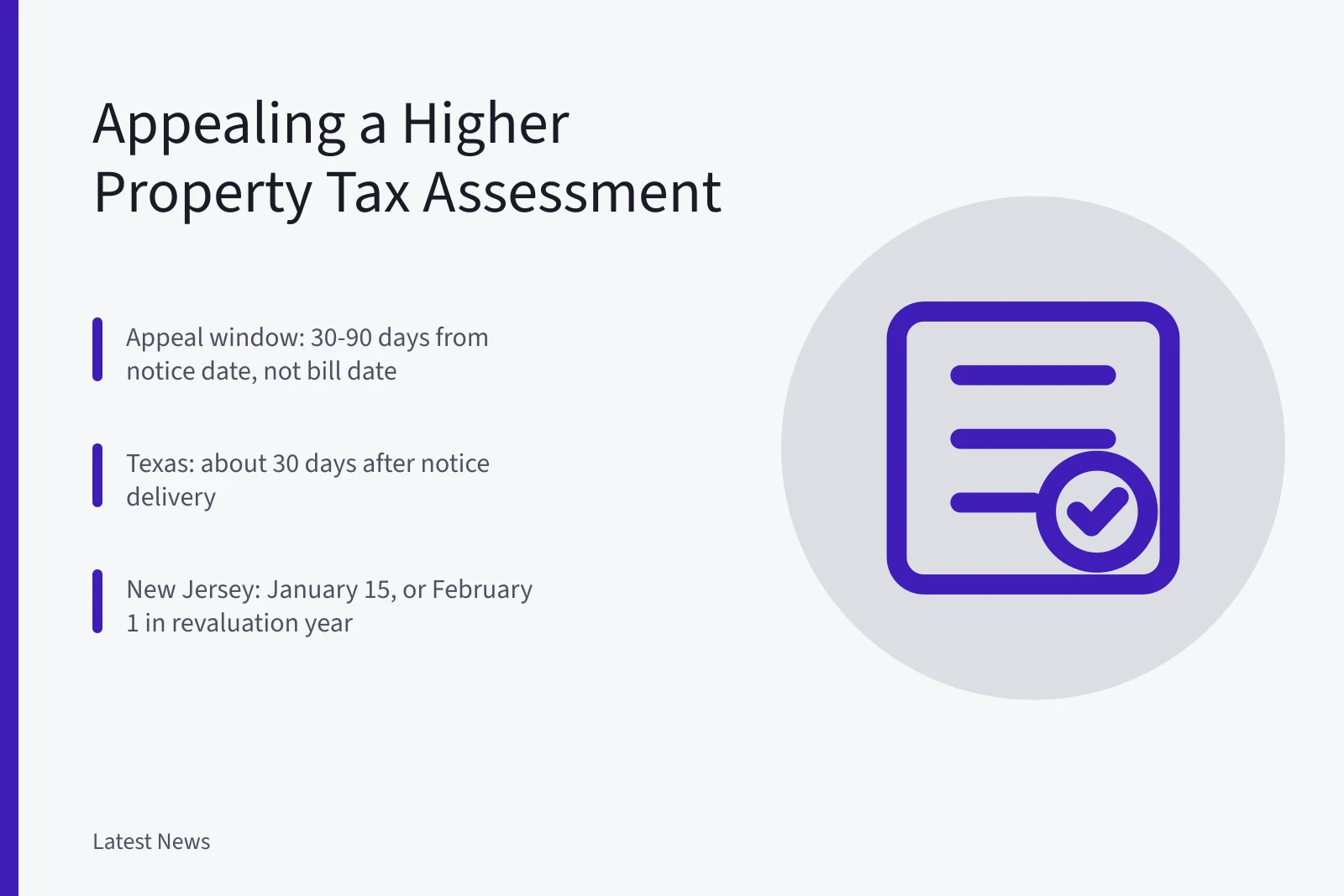
- Read the notice and find the deadline. The window is typically 30 to 90 days from the notice date, depending on the state. Texas generally runs about 30 days after the notice is delivered. New Jersey runs to January 15 for most towns, or February 1 in a revaluation year, with a filing fee of roughly 25 to 150 dollars depending on the assessed value.
- Pull the comparable sales. Gather three to five sales of similar homes in your neighborhood, closed within the last 12 months. Your county assessor's own sales file is the best starting point because the board already trusts it.
- Check the record card. Assessors publish a property record card listing bedrooms, bathrooms, square footage and lot size. Errors here are the most common and most winnable appeal. A finished basement counted twice, or a garage that does not exist, changes the value.
- File the appeal. Texas uses the Appraisal Review Board in each county. New Jersey uses the County Board of Taxation, with a further route to the Tax Court. New York City has its own process through the Tax Commission, described in the city's assessment appeal procedures.
- Prepare for the hearing. Most hearings run 15 to 30 minutes. Bring the record card, the sales list and photographs. You can appear without a lawyer, and many owners do.
What has to exist before what
A filing cannot move until you have the notice in hand. That is the blocker. Without the notice date, you cannot compute the deadline, and without the deadline you cannot schedule anything else.
Before you can argue value, you need comparable sales the board will accept. Before you can argue a factual error, you need the record card. If the card shows a feature your home does not have, the hearing becomes a correction rather than a valuation fight, and those tend to resolve faster.
One more prerequisite: the assessed value has to be above market. A high bill with a fair assessment is a levy problem, not an appeal problem.
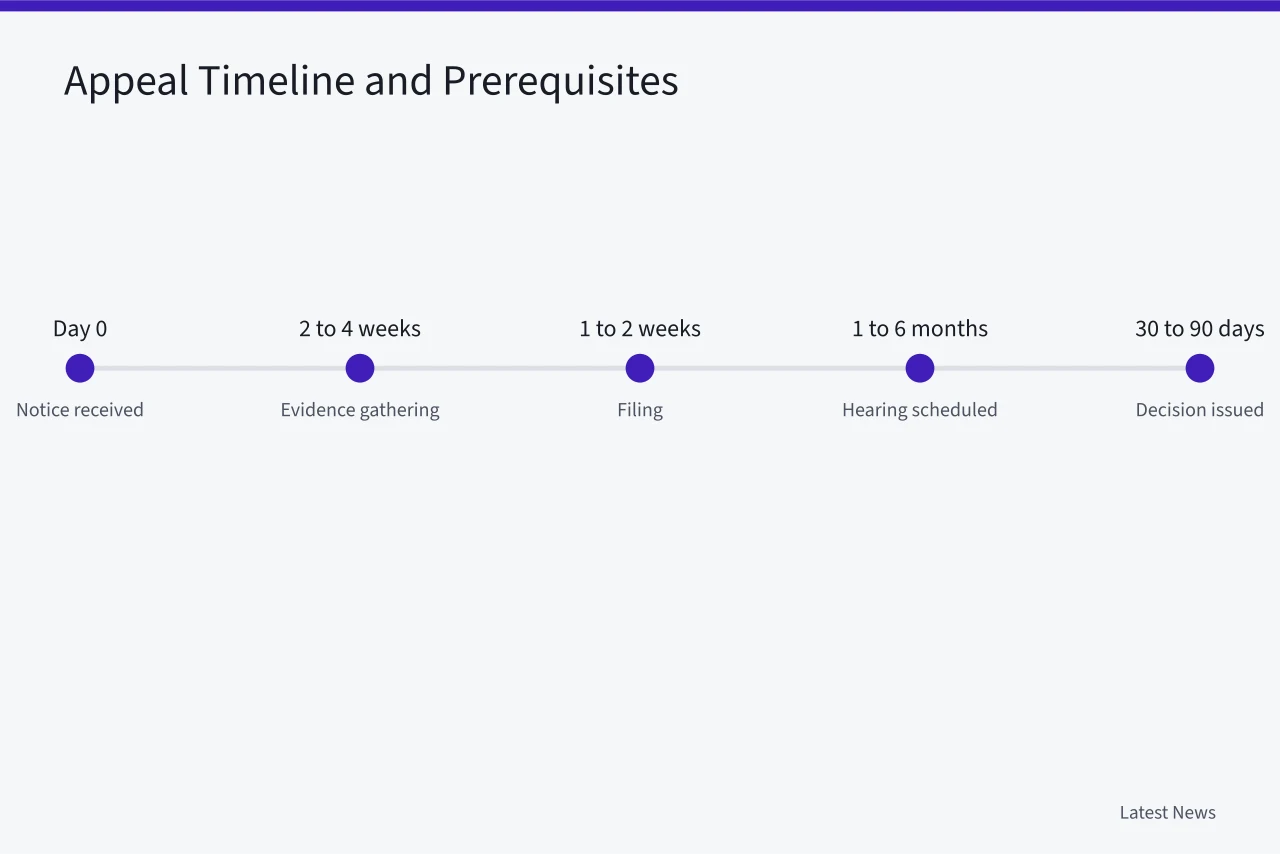
| Stage | Typical duration | What must exist first |
|---|---|---|
| Notice received | Day 0 | Mailed notice from assessor |
| Evidence gathering | 2 to 4 weeks | Record card, sales list |
| Filing | 1 to 2 weeks | Completed form, fee if required |
| Hearing scheduled | 1 to 6 months | Accepted filing |
| Decision issued | 30 to 90 days after hearing | Hearing record |
Where it stalls
The named failure mode is a missed deadline caused by waiting for the bill. Owners treat the bill as the trigger because that is when the increase becomes visible. By then the appeal window on the notice has usually closed, and the next chance comes at the following cycle, which can be two to five years out.
A second stall is thin evidence. A hearing with no comparable sales and no record card leaves the board with the assessor's number and nothing to weigh against it.
If the county denies the appeal, the route continues. New Jersey sends most disputes to the Tax Court. Texas owners can sometimes pursue binding arbitration for homes valued under a threshold set each year. State consumer protection offices can point you to the right forum, listed in the USAGov directory of state consumer offices.
What to do while waiting
Hearings can sit for months. Use that time.
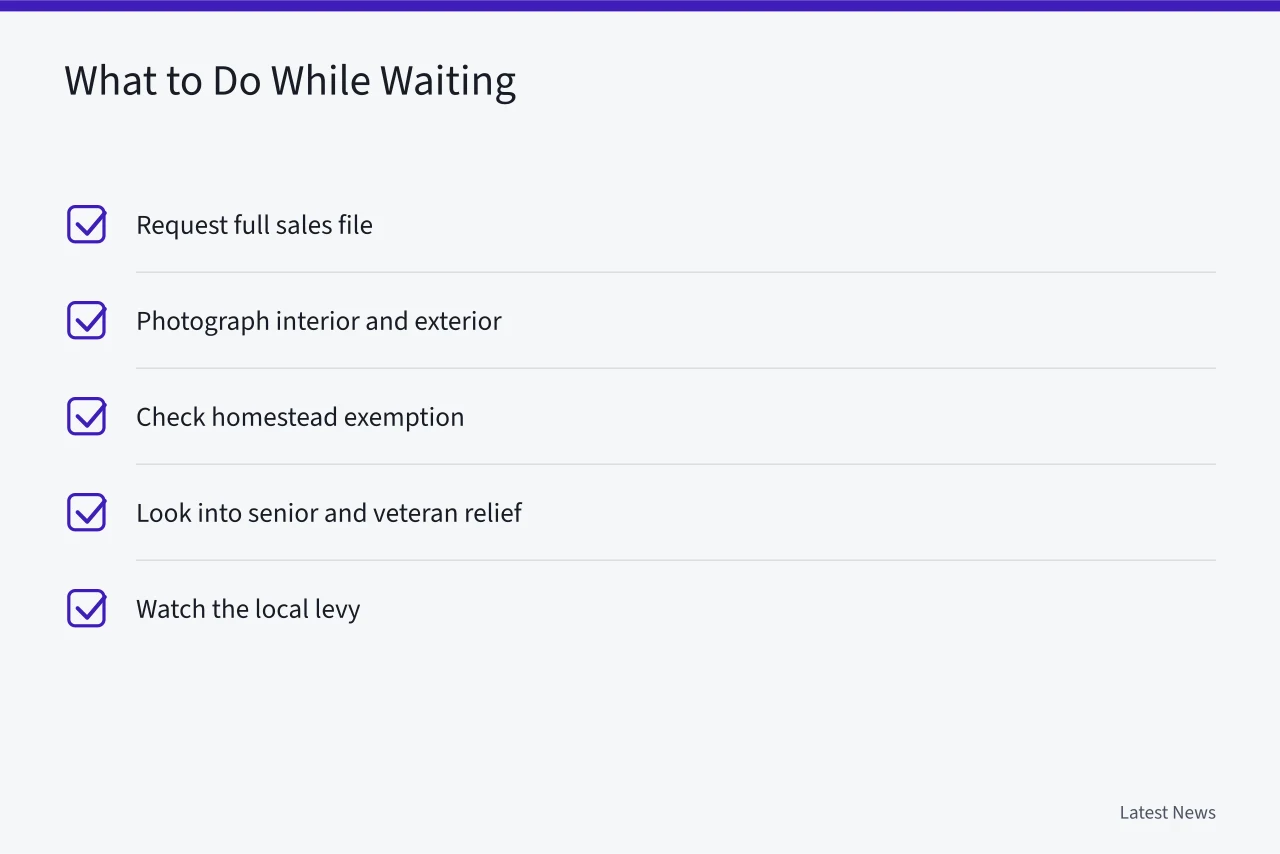
- Ask the assessor for the full sales file used to set your value.
- Photograph the interior and exterior, especially anything the record card gets wrong.
- Check whether you qualify for a homestead exemption, which many states apply automatically only after you file.
- Look into relief programs for seniors, veterans and disabled owners. These often cut the bill without touching the assessment.
- Watch the local levy. If the school board or city raises the rate, your bill can climb even after a win.
A successful appeal resets the value. It does not freeze it. The next reassessment cycle can move it again, and the levy can move independently. For how local levies feed school budgets, see this explainer on public school funding in the United States.
Example
A Texas owner gets a notice in April valuing the home 18 percent above last year. The record card lists a pool the home does not have. The owner files with the county Appraisal Review Board within 30 days, brings three comparable sales and a photo of the yard, and the board corrects the card and lowers the value. The bill still rises, because the school district raised its rate. The appeal fixed the value. It could not fix the levy.
Common questions
Does an appeal lower my tax rate? No. It lowers the assessed value the rate is applied to. The rate comes from the levy set by local governments and school districts.
How long do I have to file? It varies by state. Texas runs about 30 days from the notice. New Jersey runs to January 15, or February 1 in a revaluation year. Start from the notice date, not the bill date.
Do I need a lawyer? Usually not for a first-level hearing. Most owners appear alone with comparable sales and the record card. Larger commercial disputes often use representation.
What if I miss the deadline? You generally wait for the next cycle, which can be two to five years. Some states allow a late correction for factual errors, but that route is narrow.