Guides
How to Read a School Budget: A US Voter's Guide to Local Levies
How to read a school budget: use levy language, line items, and the funding formula to spot one-time money, recurring costs, and hidden cuts before you vote.
What to take away
- A school budget is a spending plan, not a single number. To read a school budget, start with the revenue side: how much comes from local property taxes, state aid, and federal grants.
- Read the expense lines in dollar terms and per pupil, then compare them with the prior year. A flat total can hide a cut after inflation.
- A school levy ballot measure has specific legal language. Check whether it is new money, a renewal, or a bond for construction.
- One-time federal funds such as ESSER will not cover ongoing salaries without a replacement source.
Where the money comes from
Most US districts rely on three streams: local property taxes, state formula aid, and federal grants. Local levies often require voter approval and are collected through property assessments. A higher assessment may not be final. You can review assessment appeals before assuming a levy increase.
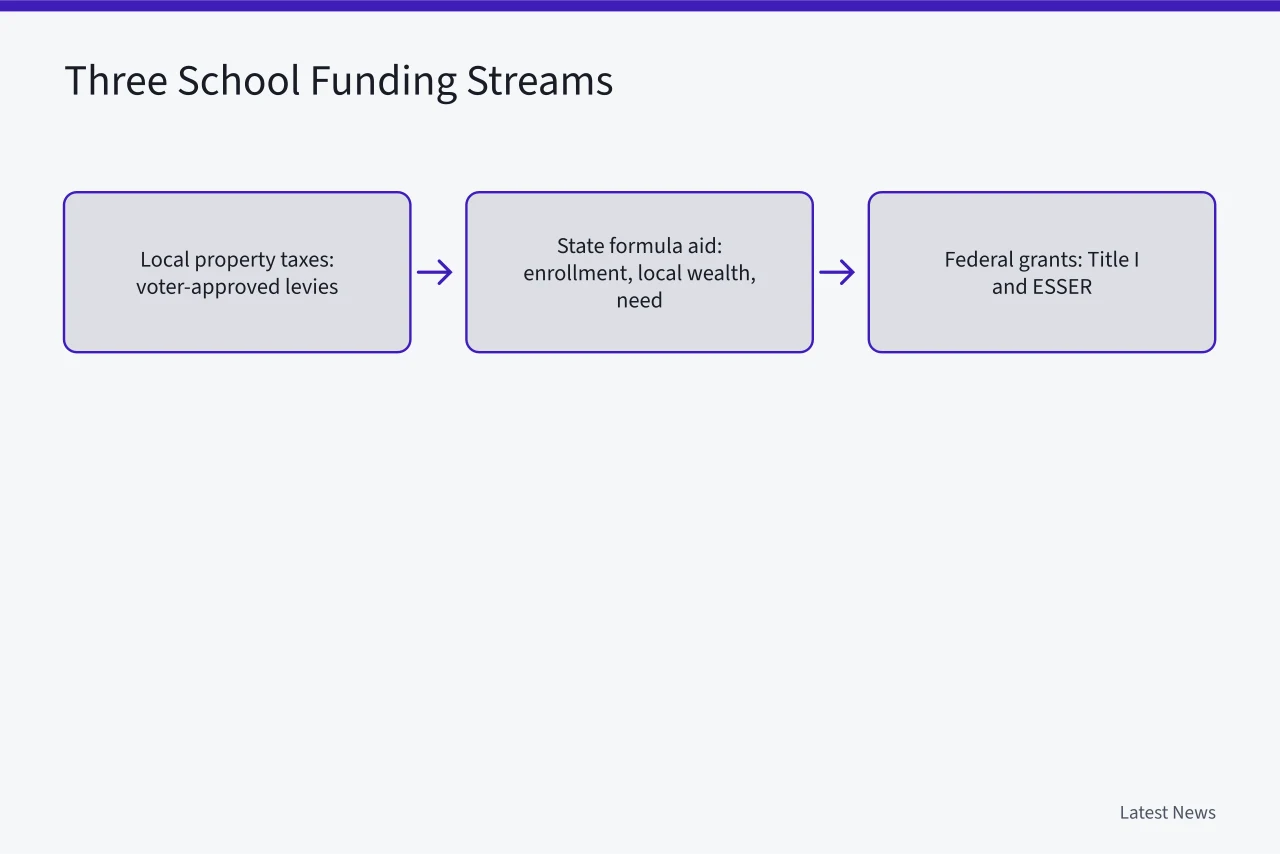
State aid follows a funding formula that weighs enrollment, local wealth, and sometimes student need. To understand school funding formula, look for the base amount per pupil and any weights for poverty or special education. Federal grants arrive through programs such as Title I and ESSER.
Line by line
Use the operating budget, not the total budget. The first school budget line items to read are the operating expenses, not the capital projects. The total often includes capital and debt service funds that renew on separate schedules. Look for these lines first:
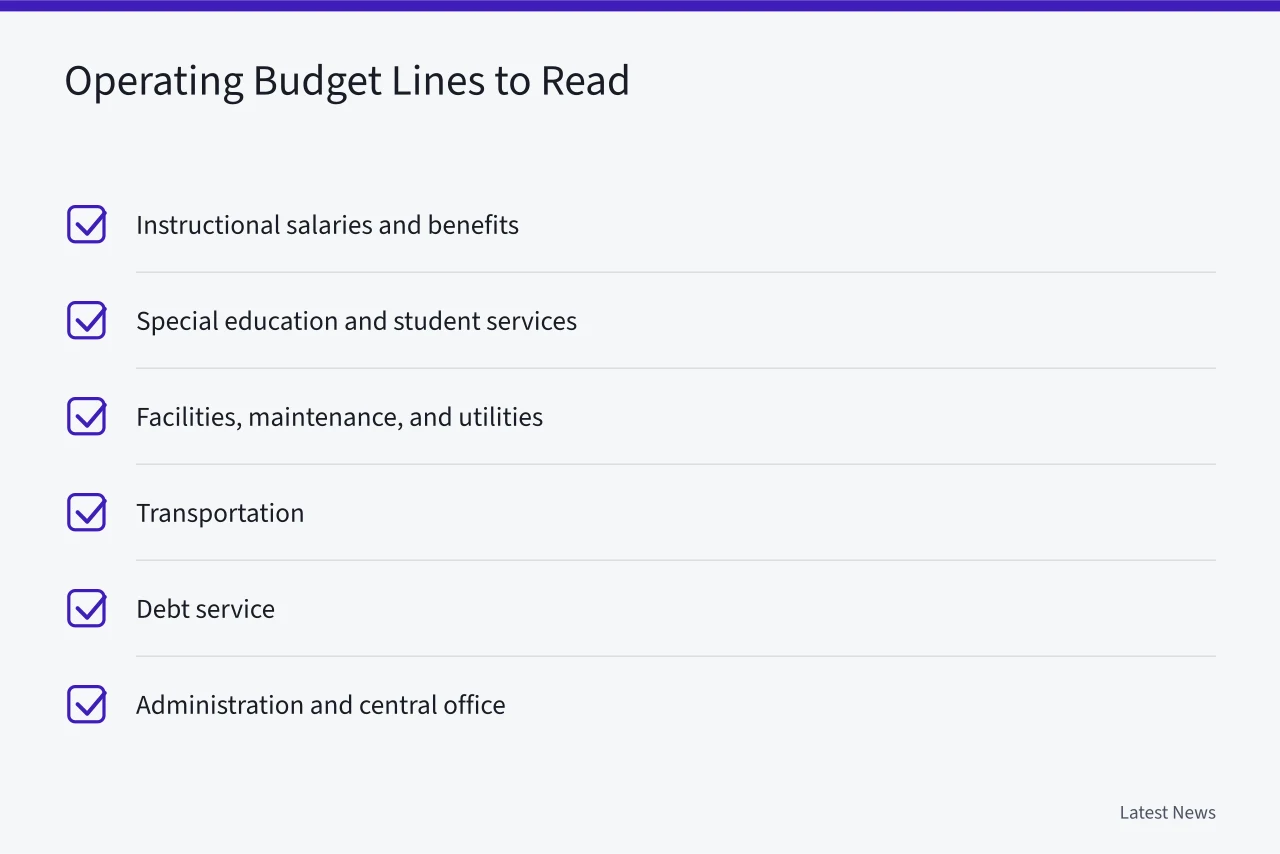
- Instructional salaries and benefits
- Special education and student services
- Facilities, maintenance, and utilities
- Transportation
- Debt service
- Administration and central office
In a typical district, instruction is the largest single category. A fall in that share while total spending rises can signal an administrative or building expansion.
What the range covers
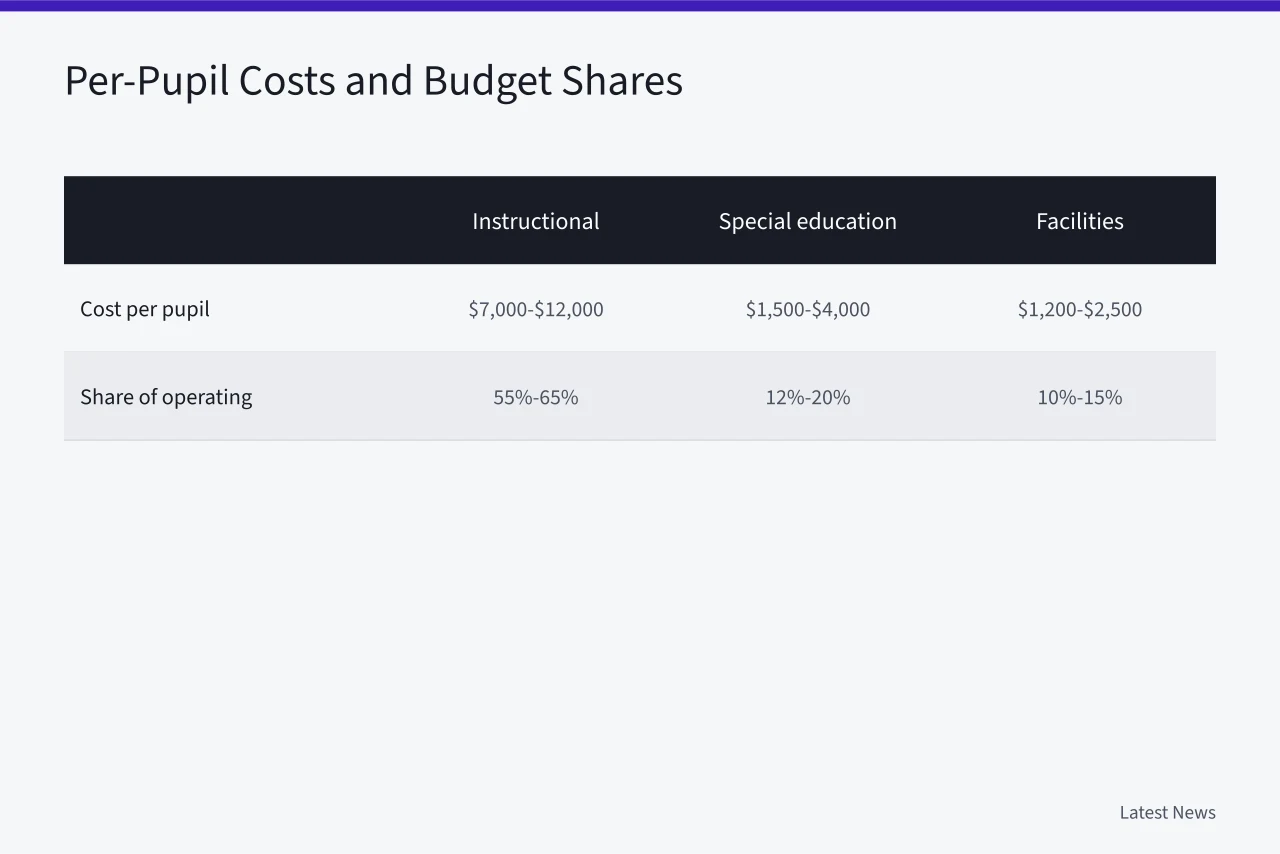
Ballpark per pupil figures help you spot a district that is far outside the normal band. The table below uses illustrative ranges for a mid sized district. Actual figures depend on region, labor costs, and special education needs.
Show the numbers
| Instructional salaries and benefits | $7,000–$12,000 |
|---|---|
| Special education | $1,500–$4,000 |
| Facilities and maintenance | $1,200–$2,500 |
| Transportation | $600–$1,400 |
| Administration | $800–$1,800 |
| Debt service | $500–$1,500 |
Do not take a single line item as good or bad. A high transportation line may reflect rural geography, not waste. Public school funding in the United States explains how local levy money is often restricted to operating costs.
Fixed against variable
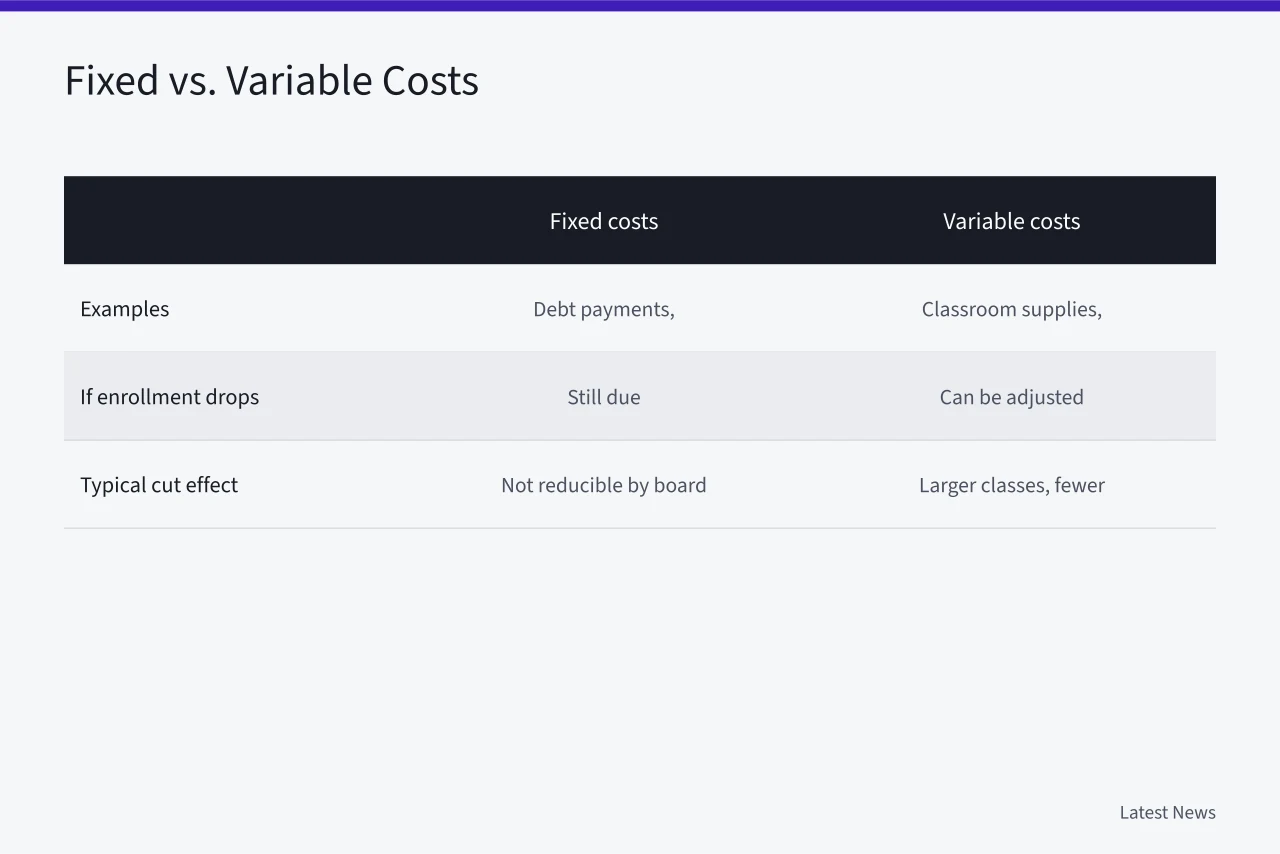
Fixed costs, such as debt payments and building insurance, stay due even if enrollment drops. Variable costs, such as classroom supplies and hourly staff, can be adjusted, but cuts to variable lines often mean larger classes or fewer buses. When you see a proposed budget, ask which lines are fixed by contract or bond covenant and which can be reduced by board vote. Public boards post these decisions under open meetings rules.
What the tools do not include
A school budget document rarely shows the full cost of long term maintenance. It also does not include the operating impact of capital projects that are approved separately. For example, a new building bond may add a gymnasium, but the utility and custodial costs appear in the operating levy years later. The property tax assessment system in each state can shift that local revenue, so read the assessment notes, not just the levy rate.
Where budgets leak
Small line items can hide recurring costs. Look for professional development contracts, subscription software, and overtime lines that grow more than five percent a year. Ask whether a one time grant is paying a position. One-time grant funds do not create recurring revenue. After they expire, the same position becomes a recurring cost.
When ESSER funds expire, districts may move those salaries into the general fund. A continuing resolution can delay federal grants, so a district may use reserves to cover the gap.
Example: reading a school levy ballot measure
A district asks voters to approve a $4.9 million operating levy. The ballot language says "replacement of an existing expiring levy." That is a renewal, not a new tax, but it may still raise taxes if property values have increased. The district's budget shows state aid falling by $1.2 million due to a drop in enrollment. The new levy covers that gap and adds two counselors. If you see a separate bond question for $38 million, that money is for buildings only, not salaries. State and local budget documents often track BEA GDP releases as a proxy for wage and benefit inflation, but they do not replace district level salary schedules.
Common questions
What is the difference between a levy and a bond? A levy raises money for operating costs such as salaries, utilities, and supplies. A bond borrows money for buildings and major renovations, repaid with interest over many years.
Why does the same levy rate raise more money? If property values rise, the same rate collects more total dollars. Voters may see an increase on their bill even when the ballot language says renewal.
How can I tell if a budget uses one time money? Look for federal grants with expiration dates, such as ESSER, and ask whether the positions they fund are listed as temporary. If the district moves those costs into the general fund, check whether it identifies a new revenue source.
Where do I find the official budget document? Start with your district's business office, the board agenda, and your state department of education.