Guides
What Is a Rate Case? How US Utility Regulators Set Your Electric Rates
What is a rate case? It is a state commission review of a utility's request, and the test is whether the utility's return on equity lands in an allowed range.
What to take away
- A rate case is a formal proceeding before a state public utility commission that sets the prices an electric utility may charge, usually for one to three years.
- The number that decides the outcome is the allowed return on equity (ROE), the profit rate a commission permits the utility to earn on shareholder money.
- A filed request is not a decision. Most cases settle or get trimmed, so the filed revenue increase is a starting bid.
- The threshold for acting as a resident is simple: file a comment or an intervention petition before the commission's published deadline, not after.
- The allowed ROE tells you what the utility may earn. It does not tell you what your bill will be, because fuel costs, riders and usage sit outside the case.
The metric that decides the case
Every rate case turns on a small set of numbers, and the most quoted is the allowed return on equity. A commission sets it after hearing from the utility, from consumer advocates and sometimes from industrial customers. Rate case basics are worth reading first if the vocabulary is new, because the filings mix accounting terms with legal ones.
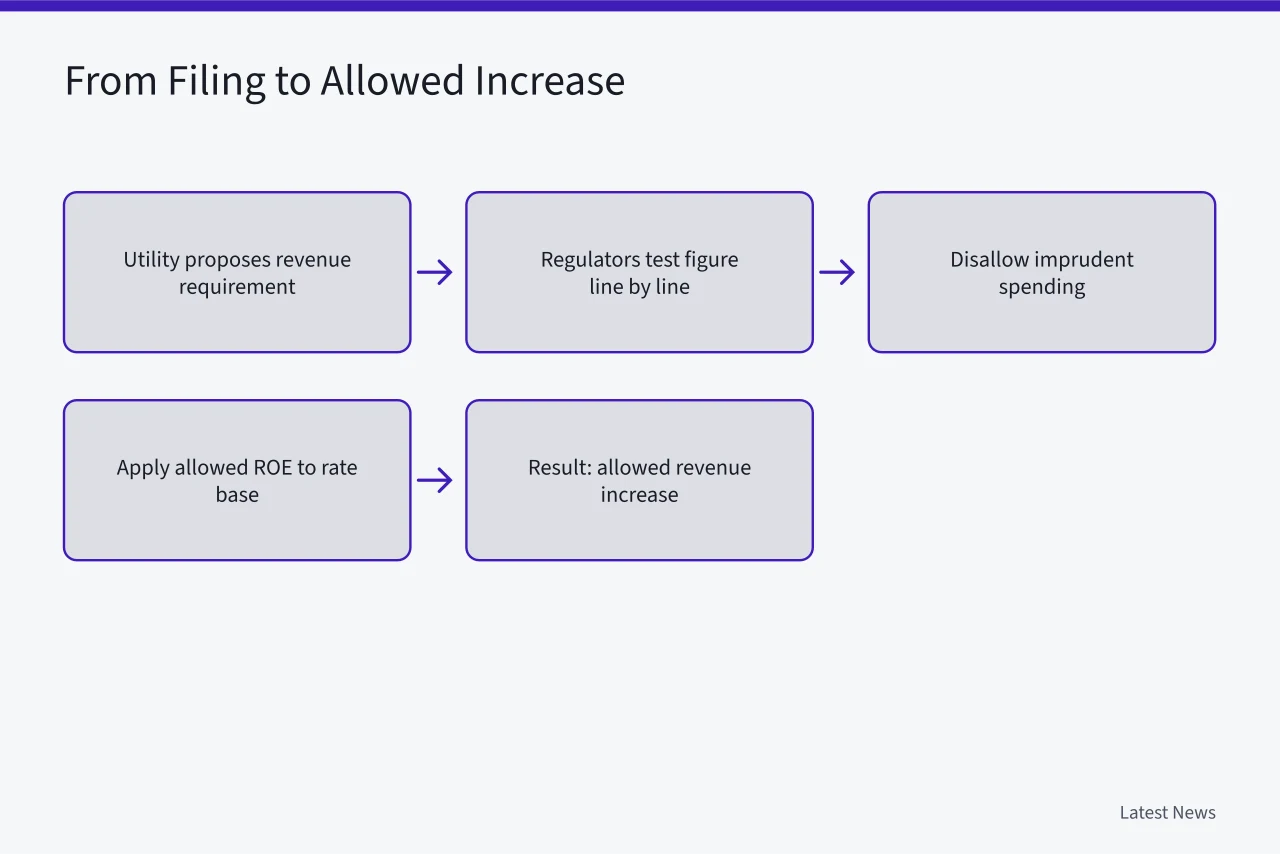
The utility proposes a revenue requirement: the total dollars it says it needs to cover costs plus a fair profit. Regulators test that figure line by line. They disallow spending they judge imprudent, then apply the allowed ROE to the remaining rate base. The result is the revenue increase the utility may collect.
| Term | What it measures | Where it comes from |
|---|---|---|
| Rate base | Value of assets used to serve customers | Utility filing, audited |
| Allowed ROE | Profit rate on shareholder equity | Commission decision |
| Revenue requirement | Total dollars needed from rates | Derived from the two above |
| Test year | Period used to project costs | Usually a recent 12 months |
How to read a filed request
Start with the requested increase in dollars and the requested ROE. Compare the ROE to what the same commission allowed in prior cases, which is public record. A request well above recent awards signals a fight; a request near them often settles.
Then check the test year. Utilities sometimes use a historical year that understates current costs, or a future year that assumes spending that has not happened. Either choice moves the number.
Public utility commission rate case dockets are posted online, usually with a comment portal. California and Texas run different systems, and the state commission structure varies enough that you should read your own commission's rules rather than assume a national standard.
A filed rate request is an opening position, not a price list. The gap between filed and approved is often the whole story.
What it cannot tell you
An allowed ROE is not a bill forecast. Fuel and purchased power costs are usually passed through separately, so a mild winter or a gas price spike can move your bill more than the rate case does.
Riders are the second gap. These are surcharges for specific items such as storm repair or energy efficiency programs, and many are approved outside a general rate case. A commission can cut the base rate and your total bill still rises.
Usage is the third. Rates are prices per kilowatt hour plus fixed charges, so your household's consumption decides the total. The case sets the price, not the quantity.
The final limit is timing. A case decided today may take effect months later, and interim rates sometimes apply while the case is pending.
When to comment, and when to stop measuring
The threshold for acting is the intervention deadline printed in the commission's notice. Miss it and you lose party status, though many commissions still accept late written comments.
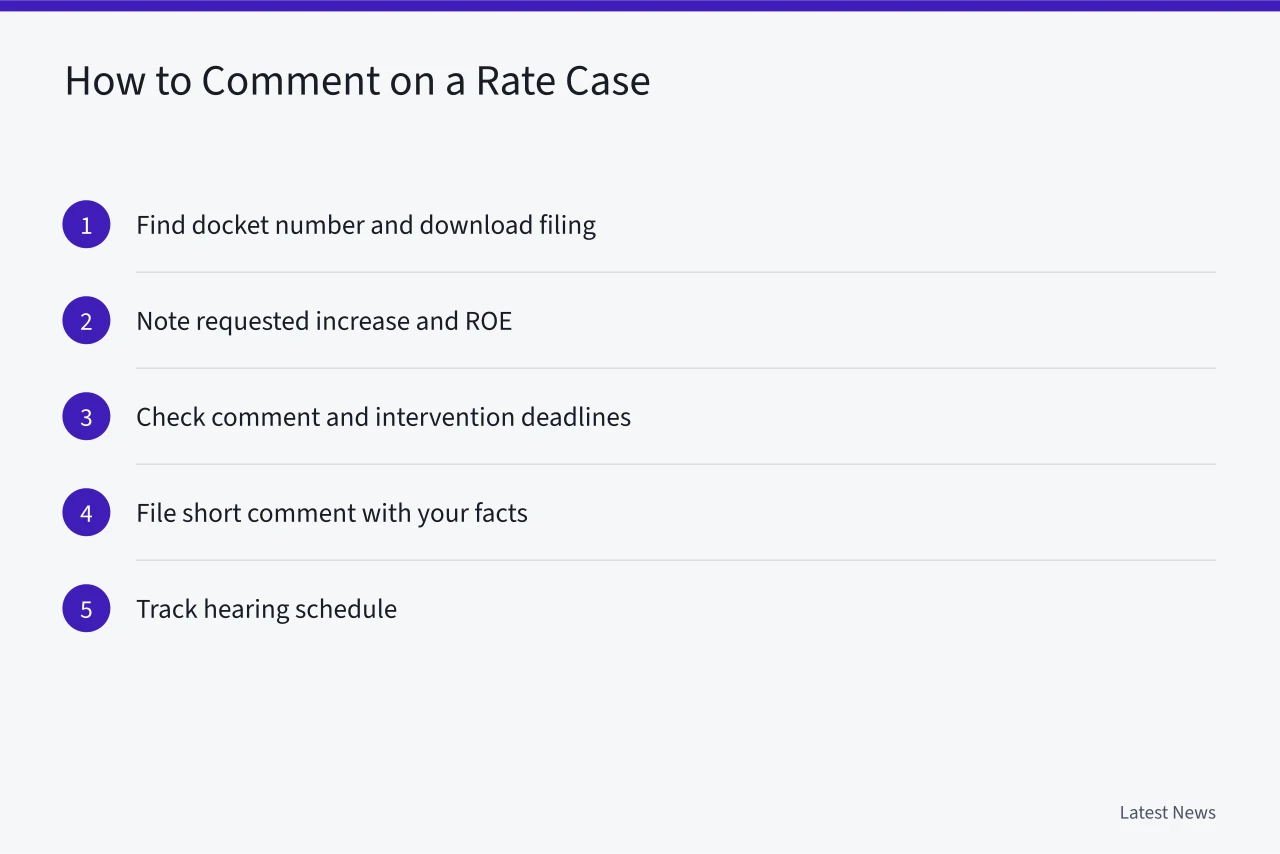
- Find the docket number on your commission's website and download the utility's filing.
- Note the requested revenue increase and the requested ROE.
- Check the deadline for public comments and for petitions to intervene.
- File a short comment stating your position and the facts behind it, such as a fixed income or a recent bill increase.
- Track the procedural schedule for hearings, which are often streamed.
An intervenor in rate case proceedings is a party, not just a commenter. Intervenors can cross examine witnesses and file briefs, but they usually need counsel, and some states require a showing of interest.
Stop measuring when the commission issues its final order. At that point the allowed ROE and revenue requirement are fixed for the term, and further tracking belongs to the next case. If the order allows an ROE far above the prior award, that is the signal to watch the utility's next filing.
Attribution and its limits
A commission decision reflects the evidence in one docket. It is not a verdict on the utility's overall performance, and it does not measure reliability, outage frequency or customer service.
Consumer advocates and utility analysts often disagree about the same filing, and both cite the same documents. The utility regulation overview is a neutral starting point, but the docket itself is the only authoritative record.
For a sense of how regulators handle public input in other proceedings, our guide to public records and open meetings rules explains what you can request and when a meeting must be open.
Common questions
How long does a rate case take? Most state commissions aim to decide within 6 to 12 months of filing, though contested cases can run longer. Interim rates may apply while the case is pending.
Can I speak at a hearing? Many commissions hold public comment hearings separate from evidentiary hearings. Check the procedural schedule for dates and whether advance sign up is required.
Does a rate case change my bill immediately? No. Approved rates take effect on a date set in the order, and the increase is often phased. Fuel and rider adjustments can move your bill sooner.
What if I disagree with the outcome? Appeals generally go to state court on a limited record, and deadlines are short. Consumer advocacy offices in many states can explain the options.