Guides
Who Qualifies for the Canadian Dental Care Plan? Provincial Eligibility Explained
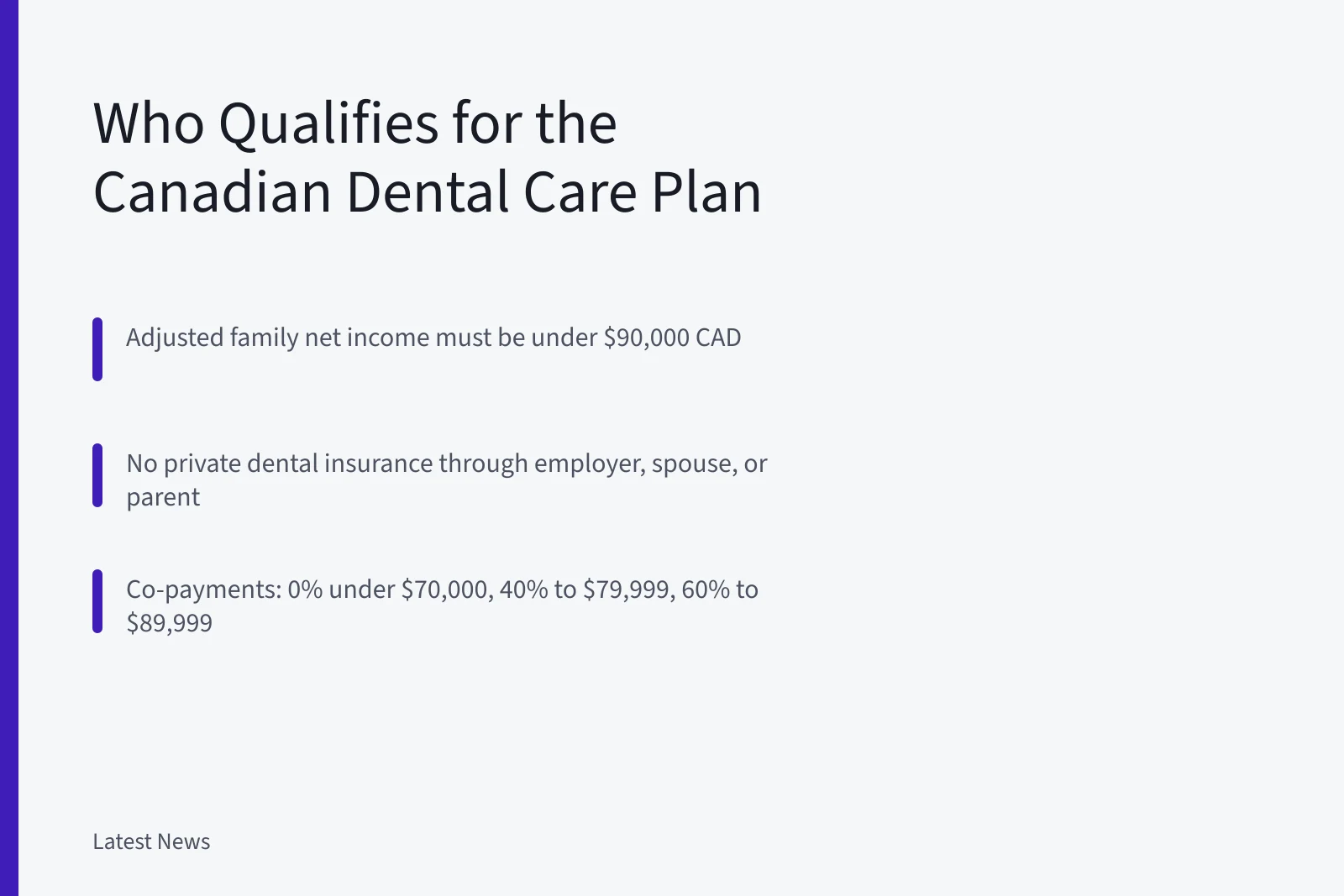
Canadian Dental Care Plan eligibility requires family net income under $90,000 and no private dental coverage, with co-payments based on income.
What to take away
- Canadian Dental Care Plan eligibility requires an adjusted family net income below $90,000 CAD and no private dental insurance.
- Provinces and territories do not set CDCP eligibility, but their separate public dental programs can cover residents who miss the federal test.
- Co-payments are 0% below $70,000 CAD, 40% between $70,000 and $79,999 CAD, and 60% between $80,000 and $89,999 CAD.
- A written confirmation of enrolment must state your coverage start date, income tier, and co-payment percentage.
- Register with the Government of Canada, not a provincial health card office.
The federal test is straightforward, yet call centres report confusion about the provincial role. The CDCP is not delivered through provincial health ministries, and a provincial health card is not proof of enrolment. The federal dental plan provinces run their own public programs, but they do not approve CDCP applications.
Readers who arrive at a provincial dental office with only a health card may be billed privately, which is why the income test and coverage confirmation matter before treatment. The same adjusted family net income figure appears when lenders explain variable mortgage risk, which our Bank of Canada Rate Hikes explainer covers.
Scopes that are actually different jobs
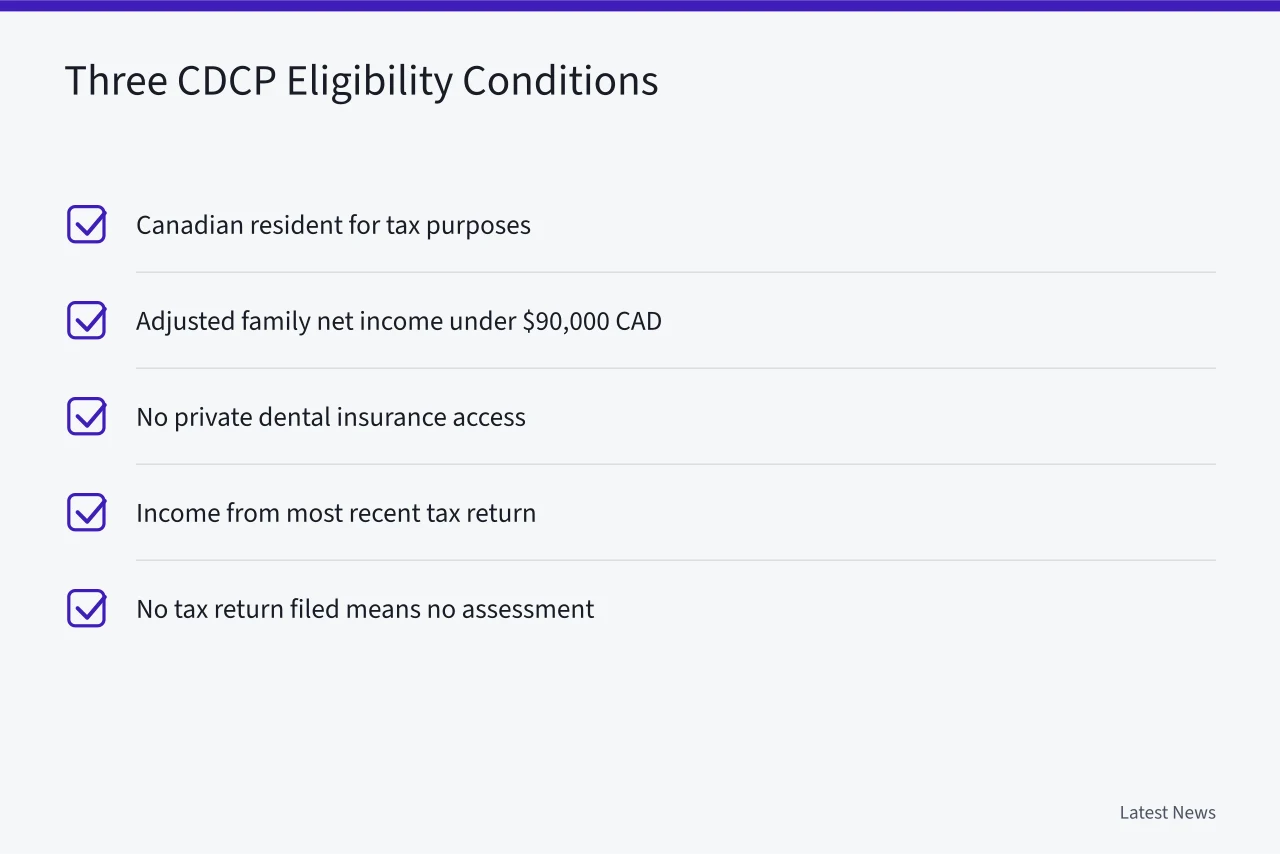
The CDCP covers Canadians who meet three conditions on the day they apply. They must be Canadian residents for tax purposes, have an adjusted family net income below $90,000 CAD, and have no access to private dental insurance through an employer, a spouse, or a parent. Adjusted family net income comes from the most recent tax return, so a person who did not file cannot be assessed.
Provincial and territorial programs are separate scopes. They often target children, seniors, people on income assistance, or urgent pain relief. For example, Ontario has the Ontario Seniors Dental Care Program, Quebec has public dental services through its health regions, and British Columbia has dental supplements for income assistance clients.
These programs do not change CDCP eligibility, and a resident can be approved for one while ineligible for the other. The Canadian Dental Care Plan article notes the rollout started with seniors and expanded by age groups through 2025.
Questions to ask
Before you apply or book an appointment, ask these questions and write down the answers.
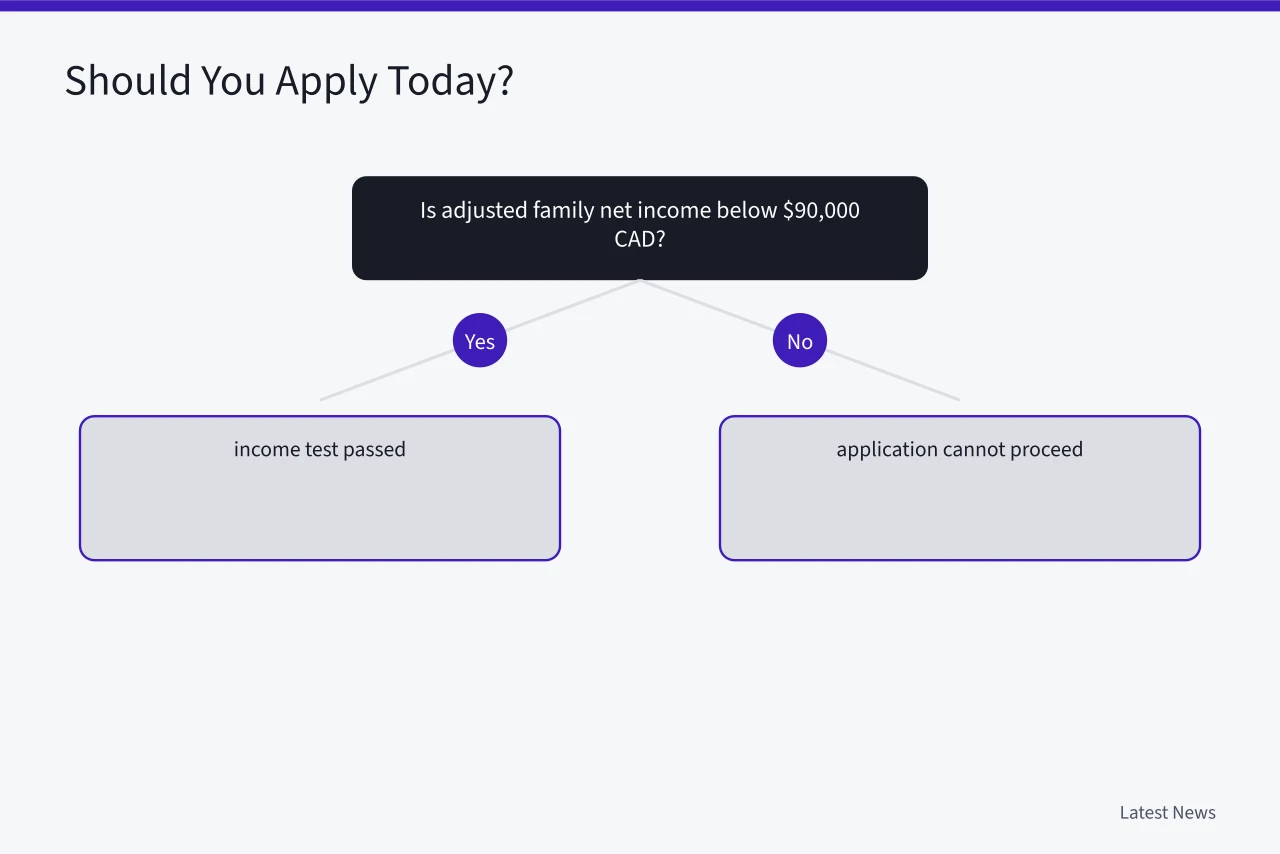
A negative answer to the income or filing question means the application cannot proceed today. An affirmative answer to the private insurance question does as well. Asking these questions in quoted form lets you compare answers from a call centre against the official criteria. The same discipline of reading the primary source applies before you trust a call centre answer; our How to read a weather alert explainer shows how to separate an alert from an instruction.
Evidence to request
Keep the following verification ready before you accept any eligibility statement.
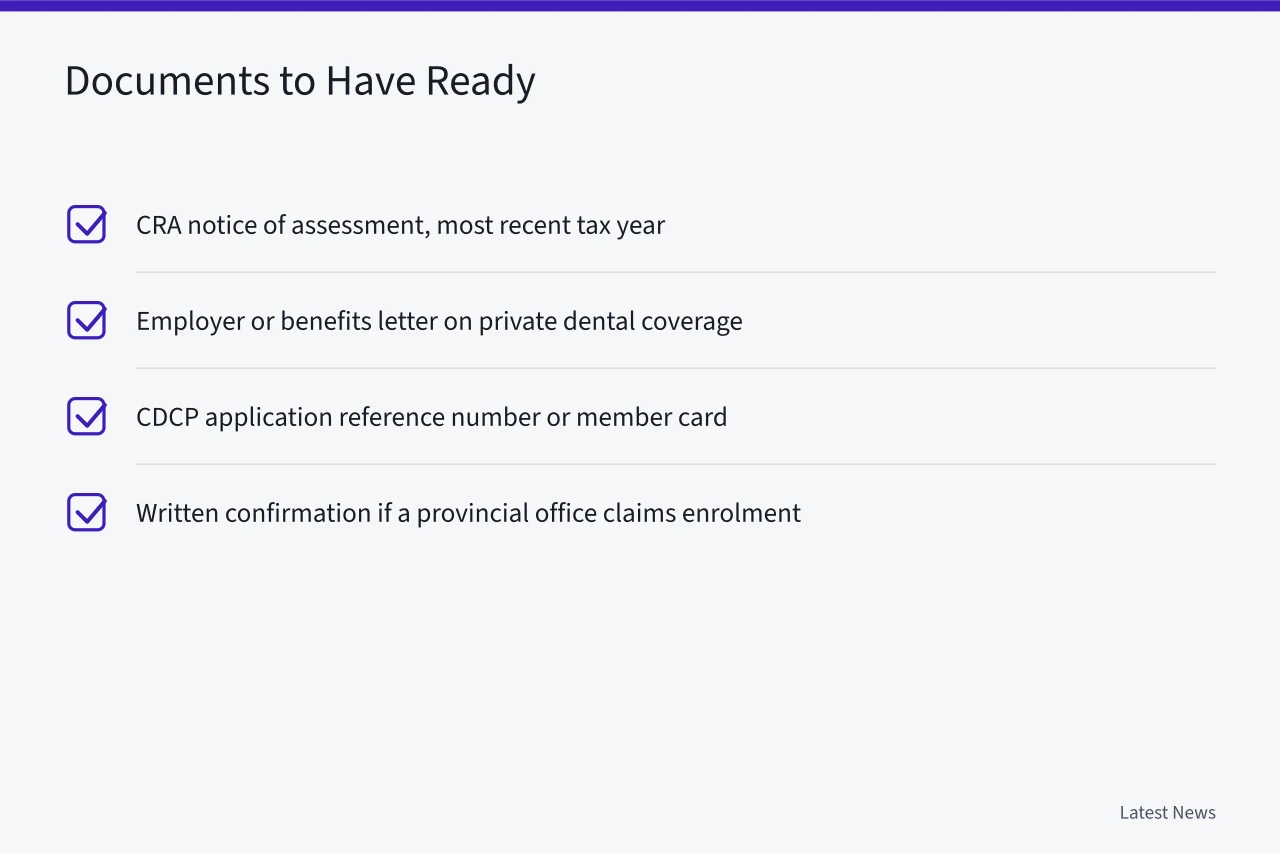
If a provincial dental office claims you are enrolled without showing any federal letter, request the written confirmation. Our guide to Public records and open meetings rules explains how to ask for documents when a public program gives an oral answer.
Answers that should end the conversation
Some answers should stop the process immediately.
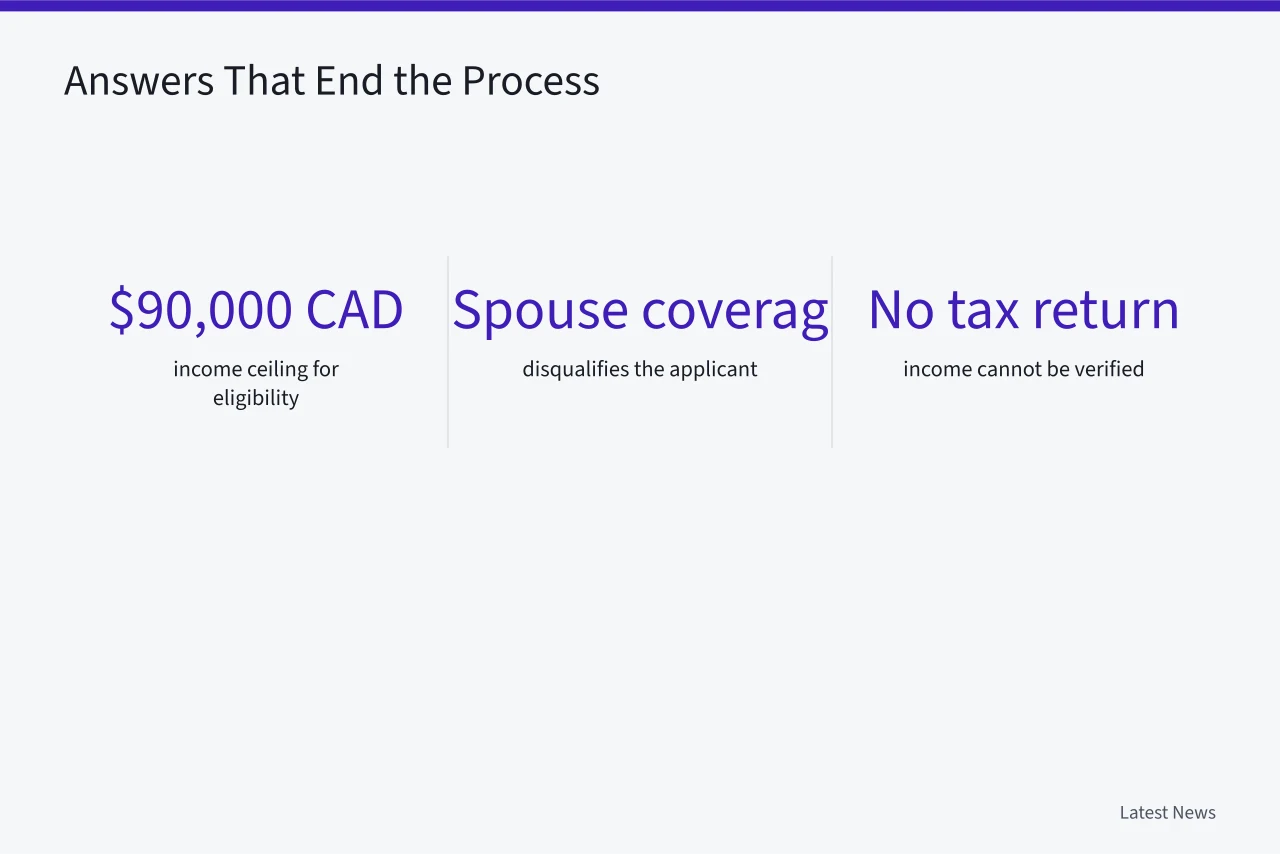
If a call centre or dental office gives one of these answers, do not book treatment as a CDCP patient. Paying privately and hoping for later federal reimbursement is not a path to coverage. A second opinion from Service Canada can confirm whether the answer was correct, but the disqualifying fact will not change. Our explainer on Correction and update policies shows how newsrooms handle similar threshold changes when a rule shifts.
The CDCP does not use provincial health cards. Carry your plan member card, not a provincial card, when you book.
What the agreement must say
A confirmation of enrolment under the CDCP is the document that matters. It must state the applicant's full name, the coverage start date, the adjusted family net income tier used, and the co-payment percentage that will apply. It must also state that no private dental coverage was declared. Without these five items, the document is not a reliable agreement to show a dentist.
Before you rely on any oral claim, ask for that written confirmation. A dental office can see the federal payment schedule, but only the confirmation letter states your tier.
Common questions
Does the CDCP cover all dental services? No. The CDCP covers a set of services defined by the federal government, and some services require preauthorization. Check the official plan page for the current service list.
Can I qualify if my income is over $90,000? No. The adjusted family net income threshold is fixed at $90,000 CAD for eligibility, and there is no partial eligibility above that amount.
Do provinces decide who gets the CDCP? No. Eligibility and registration are federal. Provinces and territories run separate public dental programs, but they do not approve or deny CDCP applications.
What if I have private coverage but it does not include dental? If the private plan covers no dental services at all, you may still qualify. The test is access to private dental insurance, not any private plan.